Weddings & Events
The Complete Wedding Transportation Guide
How to plan elegant, seamless transportation for one of the most important days of your life
Great weddings feel effortless. They rarely are.
There is a moment on almost every wedding day when time starts moving differently.
It might happen in the car on the way to the ceremony, when the noise of the morning finally quiets and the day becomes real. It might happen after the ceremony, when the doors close behind you and you realize you are leaving as newlyweds. Or maybe it happens at the end of the night, when the music fades, the sparklers burn low, and the two of you slip away from the reception together.
Those moments are easy to overlook when planning a wedding. They rarely appear at the top of a checklist. They are not as visible as the flowers, the dress, the venue, or the band. But they are often the moments couples remember most clearly.
Transportation is not just how people get from one place to another on your wedding day. It is the invisible structure that allows the day to unfold. It keeps the timeline moving, gives your photographer the space to work, helps guests arrive comfortably, and protects you from the kind of small delays that can quietly turn into stress.
The best wedding transportation does not call attention to itself. It simply works. Vehicles arrive early. Drivers know where to be. Guests know where to go. The couple never has to wonder who is waiting, who is late, or how they are getting to the next location.
That kind of calm does not happen by accident. It is planned.
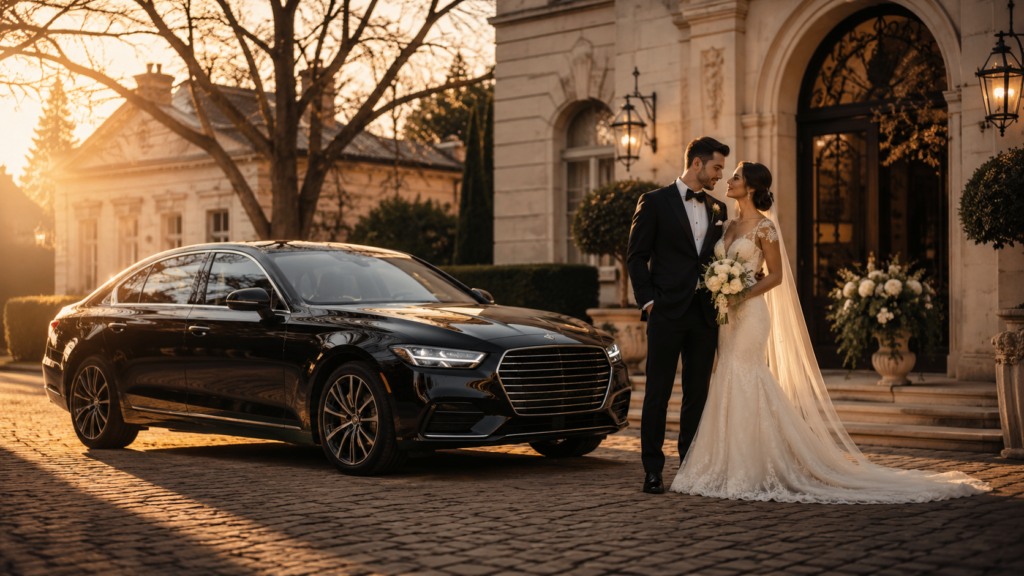
Wedding transportation should feel calm, polished, and intentionally planned—not rushed or improvised.
The day between the moments
Most couples think about the big pieces first: ceremony, reception, dinner, music, photography. That makes sense. Those are the visible parts of the celebration.
But weddings are also made up of the spaces in between.
The drive from the hotel to the venue. The short ride to the photo location. The movement of parents, grandparents, and the bridal party. The trip from the ceremony to the reception. The final departure at the end of the night.
These transitions are where timelines are won or lost.
A ceremony that starts ten minutes late may push family portraits into cocktail hour. A missing vehicle may keep the bridal party waiting outside in the heat. A guest shuttle that leaves too early can strand late arrivals. A driver who does not know the venue entrance may create confusion at the exact moment everyone should feel settled.
A thoughtful transportation plan removes those uncertainties before the day begins.
Your transportation provider should know the full schedule, not just the pickup address. They should understand where the photographer needs you, when family members should arrive, how much time the venue requires for loading and unloading, and what happens if weather, traffic, or delays change the plan.
A beautiful wedding is not only about design. It is about flow.
Transportation is what creates that flow.
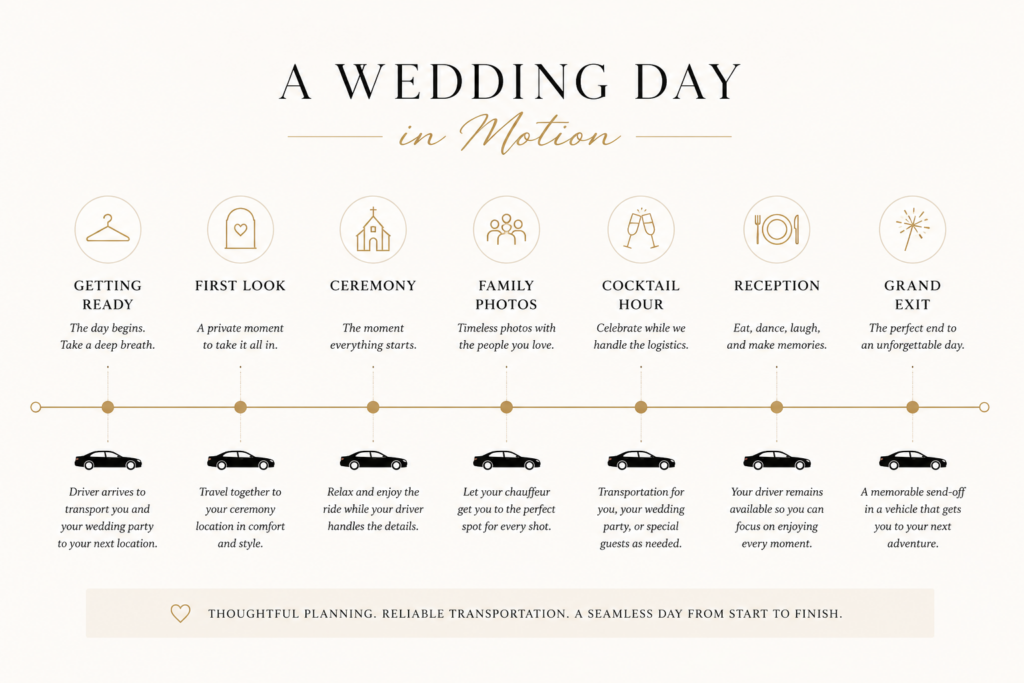
When to book wedding transportation
By the time you have chosen your venue and photographer, transportation deserves real attention.
Luxury vehicles book quickly, especially during peak wedding season. Spring, summer, and fall weekends can fill months in advance, and holiday weekends often disappear even faster. Waiting until the final month may leave you choosing from whatever is available instead of what fits your day.
For most weddings, transportation should be discussed at least six months before the date. If your wedding falls during peak season, involves multiple locations, requires specialty vehicles, or includes guest transportation, nine to twelve months is better.
At that stage, you do not need every detail finalized. Your timeline will likely change. Your guest count may shift. Your photography schedule may still be in progress. But reserving the right vehicles early gives you flexibility later.
A good transportation plan becomes more precise as the wedding gets closer.
Six months out, you should know the broad structure: who needs transportation, which locations are involved, and whether you need hourly service, point-to-point service, guest shuttles, or a combination.
One month out, the details should be tightening. Addresses should be confirmed. Your planner or coordinator should know where vehicles will stage. Your photographer should know which vehicles are part of the photo plan.
One week out, everyone should be working from the same timeline.
That final confirmation matters. Wedding days are emotional enough. Nobody should be searching for a driver’s phone number while the bride is stepping into the car.
Choosing the right vehicle
The best wedding vehicle is not always the flashiest one.
It is the one that fits the moment.
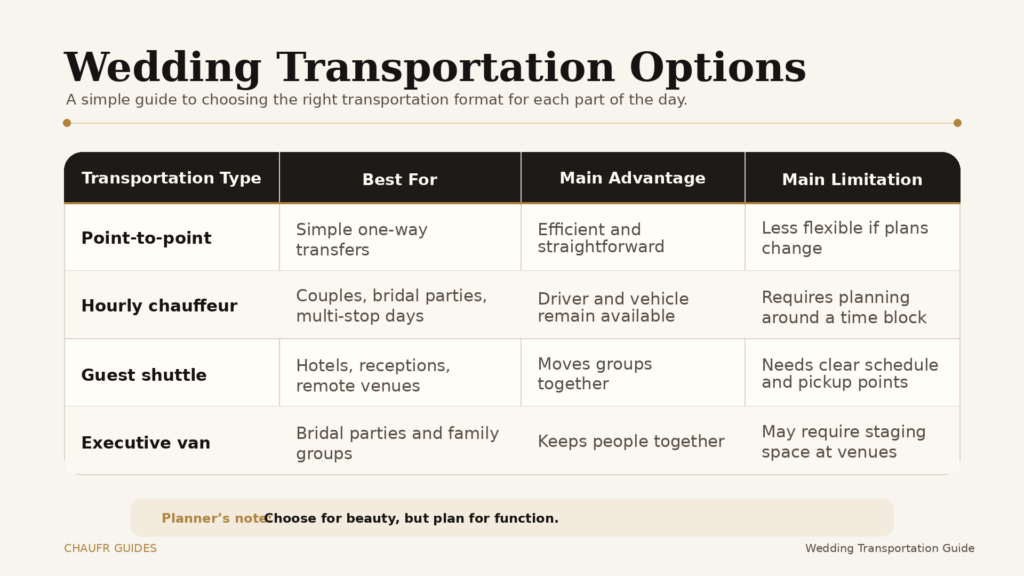
For some couples, that means a classic luxury sedan for a quiet, elegant departure. For others, it means a black SUV that can comfortably move family members between locations. For larger wedding parties, an executive van may be the most practical and polished option.
The decision should begin with the experience you want to create.
A sedan feels intimate. It is ideal for the couple, parents, or VIP guests. It photographs well, arrives cleanly, and suits almost any style of wedding.
A luxury SUV offers more space while still feeling elevated. It is often the better choice when dresses, luggage, weather, or family members need extra room. SUVs are especially useful for airport arrivals, hotel transfers, and moving the couple between multiple locations.
An executive van or Sprinter is often the smartest choice for wedding parties and guest transportation. Instead of coordinating several separate vehicles, everyone travels together. That can simplify timing, reduce confusion, and keep the group energy high throughout the day.
The vehicle should complement the wedding, not compete with it. A modern black sedan may look perfect outside a city venue. A luxury SUV may fit a winter wedding better. A Sprinter may be the difference between a relaxed bridal party and a scattered one.
Choose for beauty, but plan for function.
The right vehicle should look good in photos and make the day easier.
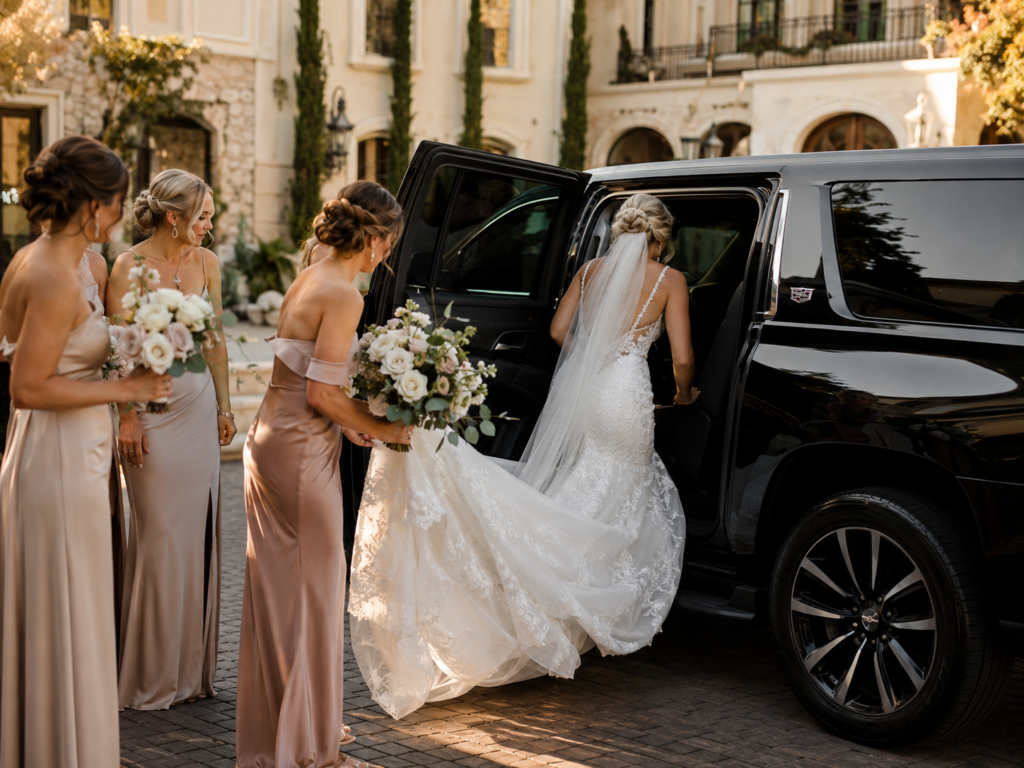
Space matters. Dresses, flowers, family members, and weather can all affect which vehicle makes the most sense.
Hourly service changes everything
One of the most common mistakes couples make is treating wedding transportation like a series of separate rides.
A wedding day is rarely that simple.
You may need transportation from a hotel to a ceremony, then to a photo location, then to the reception, then back to the hotel at the end of the night. Trying to manage each piece separately can create unnecessary stress.
Hourly chauffeur service solves that problem.
Instead of booking one ride at a time, you reserve the chauffeur and vehicle for a set period. During that time, the vehicle remains available as the day unfolds. If portraits take longer than expected, you are not ordering another car. If the ceremony runs late, your chauffeur is already there. If you need to make an extra stop, the plan can adjust.
That flexibility is one of the biggest advantages of professional wedding transportation.
Point-to-point service can work well for simple transfers, such as airport pickup or transportation from a hotel to the venue. But for the couple, bridal party, or immediate family, hourly service often creates a better experience.
Wedding days do not always move perfectly. Good transportation planning makes room for that.
Do not forget your guests
Guest transportation is one of the most generous details a couple can provide.
It is also one of the most practical.
If your venue has limited parking, your guests are staying at a hotel, alcohol is being served, or the ceremony and reception are in different places, transportation can make the entire celebration feel more thoughtful.
Guests may not remember every floral arrangement, but they will remember whether they felt taken care of.
A shuttle from the hotel to the venue can prevent late arrivals and reduce parking confusion. Return transportation at the end of the night allows guests to enjoy the reception without worrying about driving. For older family members, transportation can make the day more comfortable and accessible.
The key is communication.
Guests should know exactly where to meet, what time vehicles depart, how often shuttles run, and whether return transportation is available. This information should appear on the wedding website, in welcome bags, or in a message sent before the wedding weekend.
A beautiful transportation plan is useless if guests do not understand it.
Make it simple. Make it clear. Then let everyone enjoy the day.
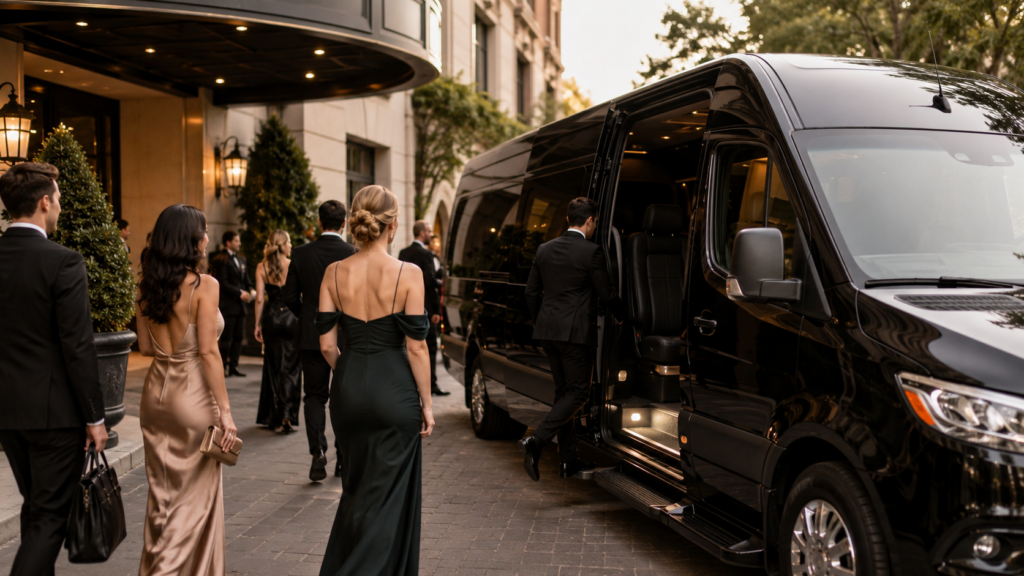
Guest transportation is one of the easiest ways to make a wedding feel polished, organized, and considerate.
Build more time than you think you need
Wedding timelines are optimistic by nature.
Hair and makeup can run long. Family portraits can take extra time. Guests may need help finding the ceremony space. A dress may need adjusting. Someone may forget flowers, vows, rings, shoes, or a phone.
The solution is not panic.
The solution is buffer time.
Transportation should never be scheduled so tightly that one small delay affects the entire day. Build extra time around each transition, especially if you are traveling between locations, moving a large group, or getting married in an area with traffic, parking limitations, or unpredictable weather.
A professional coordinator may build ten to fifteen minutes of buffer into smaller transitions and more time into major moves between venues. If your ceremony and reception are in different cities, the buffer should be even larger.
This is where professional chauffeurs can make a meaningful difference. They understand timing, staging, loading, unloading, traffic patterns, and the importance of arriving early. They are not simply following a map. They are helping protect the schedule.
The goal is not to make the day feel rigid.
The goal is to give it room to breathe.
The grand exit deserves its own plan
Couples often spend months imagining the ceremony entrance.
The exit deserves just as much attention.
Whether you are leaving through sparklers, bubbles, confetti, flower petals, or a quiet farewell with family, your departure is one of the final images of the night. It is often photographed, filmed, and remembered.
Your getaway vehicle should be ready before the exit begins. The chauffeur should know exactly where to stage. The photographer should know which side of the vehicle offers the best shot. Your planner should know when to gather guests and how to guide the couple outside.
Small details matter here.
If the car is parked too far away, the moment loses energy. If the vehicle arrives late, guests are left waiting. If the driver does not know the exit plan, the send-off can feel awkward.
When done well, the grand exit feels cinematic without feeling staged.
You walk through the celebration, step into the vehicle, close the door, and leave together.
It is simple.
It is beautiful.
It is the ending the day deserves.
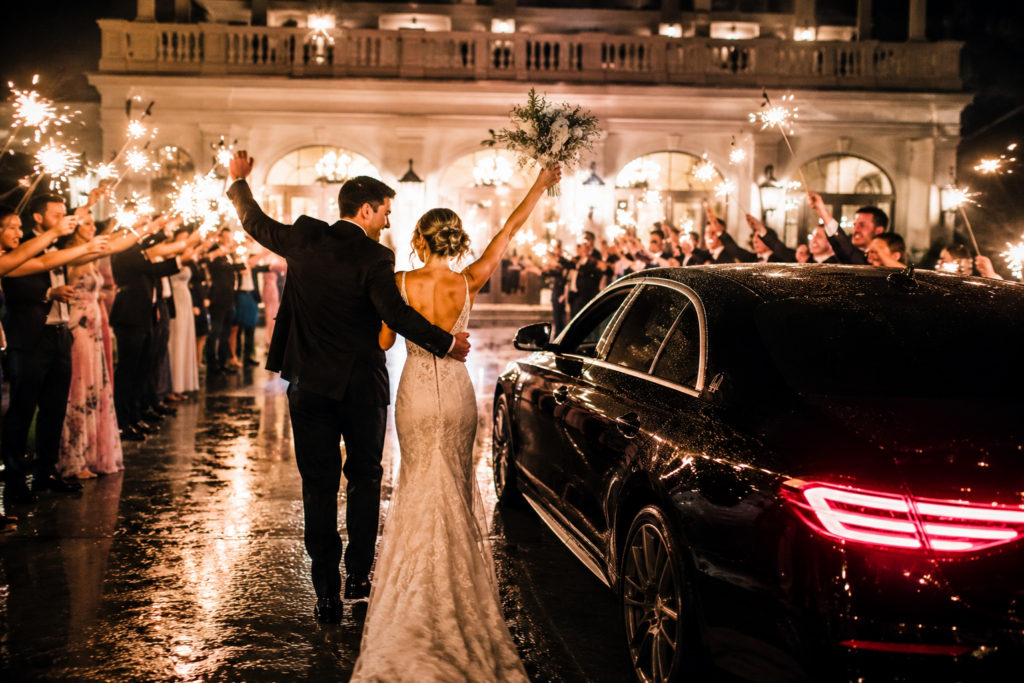
A well-planned grand exit turns the final ride of the night into one of the most memorable scenes of the wedding.
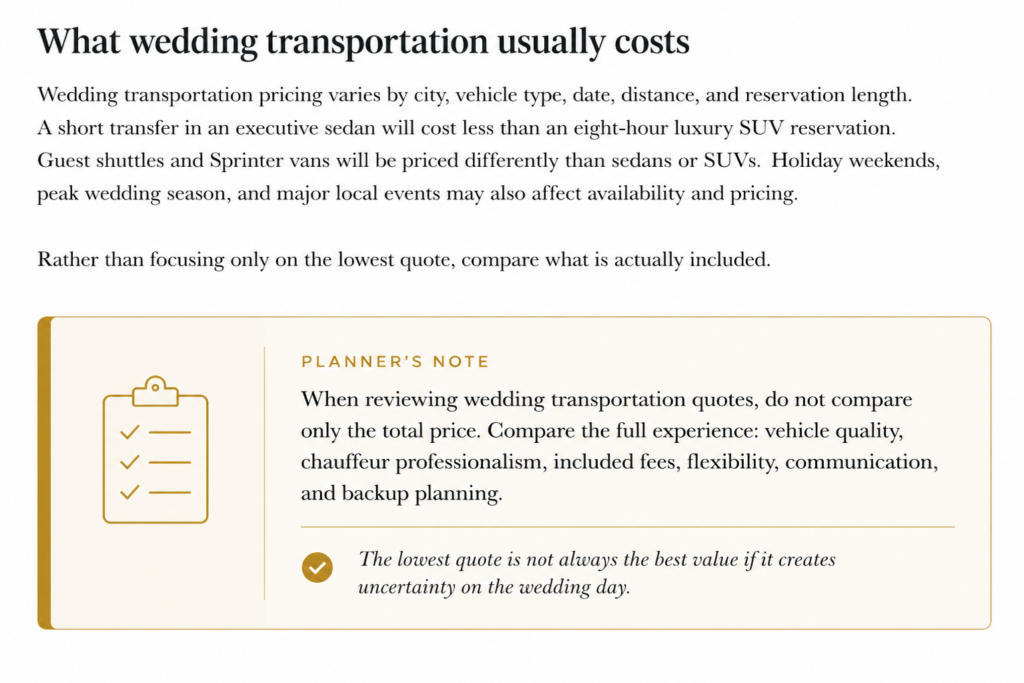
What wedding transportation usually costs
Wedding transportation pricing varies by city, vehicle type, date, distance, and reservation length.
A short transfer in an executive sedan will cost less than an eight-hour luxury SUV reservation. Guest shuttles and Sprinter vans will be priced differently than sedans or SUVs. Holiday weekends, peak wedding season, and major local events may also affect availability and pricing.
Rather than focusing only on the lowest quote, compare what is actually included.
Does the price include gratuity?
Are tolls, airport fees, parking, or waiting time separate?
Is the vehicle reserved exclusively for your event?
Is there a minimum number of hours?
What happens if the wedding runs late?
A cheaper quote can become more expensive if important fees are added later. A higher quote may be better value if it includes professional coordination, clear communication, reliable drivers, and the right vehicle for the day.
Transportation is not the place to gamble on uncertainty.
It protects too many other parts of the wedding.
Questions to ask before booking
A reliable wedding transportation provider should be able to answer practical questions clearly.
Ask whether the company is licensed and insured. Confirm what vehicles are available and whether the exact vehicle can be guaranteed. Ask what happens if the wedding runs late, whether overtime is available, and how billing works if the timeline changes.
You should also ask about driver attire, vehicle cleanliness, decorations, food or beverage policies, and backup vehicles.
If you are booking guest transportation, ask how many passengers each vehicle holds, where the vehicle can stage, how long loading usually takes, and whether multiple trips are possible.
If you are booking transportation for the couple, ask whether the chauffeur will remain nearby during photos or the reception.
Professional companies are used to these questions. They should not make you feel difficult for asking them.
Clear answers are a sign of experience.
Vague answers are a warning.
The photographer should know about the car
Wedding transportation is not only logistical.
It is visual.
The vehicle can become part of the story your photographer tells. A quiet moment in the back seat. A hand on the door. The bride stepping out of the vehicle. The couple leaning against the car after the ceremony. The final image of the night as the vehicle pulls away.
These images are often some of the most elegant and emotional photos in the gallery.
Let your photographer know what vehicle you are using and when it will be available. If you want arrival photos, departure photos, or portraits with the vehicle, include those moments in the timeline.
A beautiful vehicle cannot be photographed if it is parked in the wrong place or rushed out of the schedule.
Plan the shot before the day arrives.
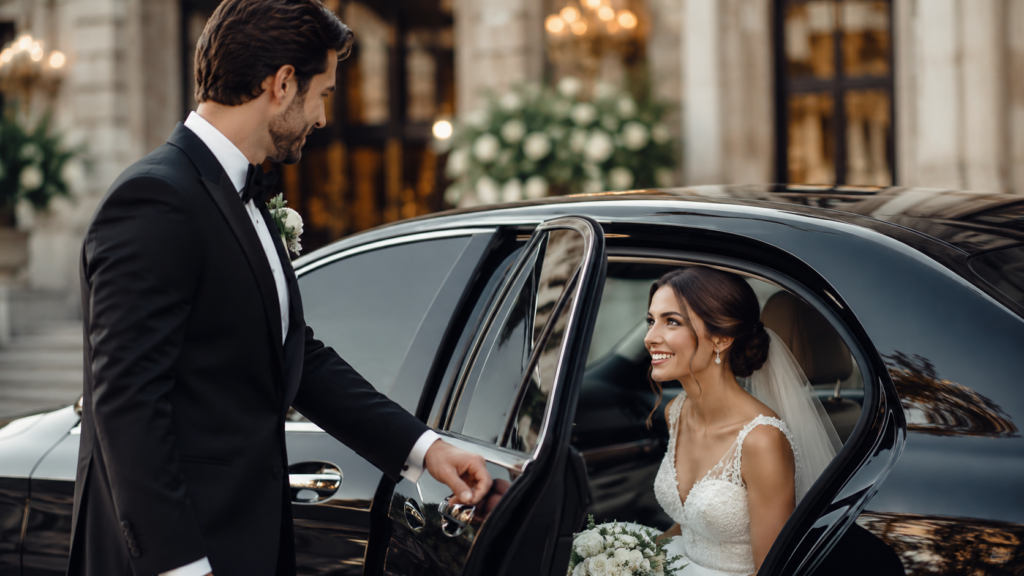
The best transportation photos often come from quiet, unscripted moments between major events.
A simple wedding transportation checklist
Before your wedding day, confirm every detail in writing.
Use this checklist as a starting point:
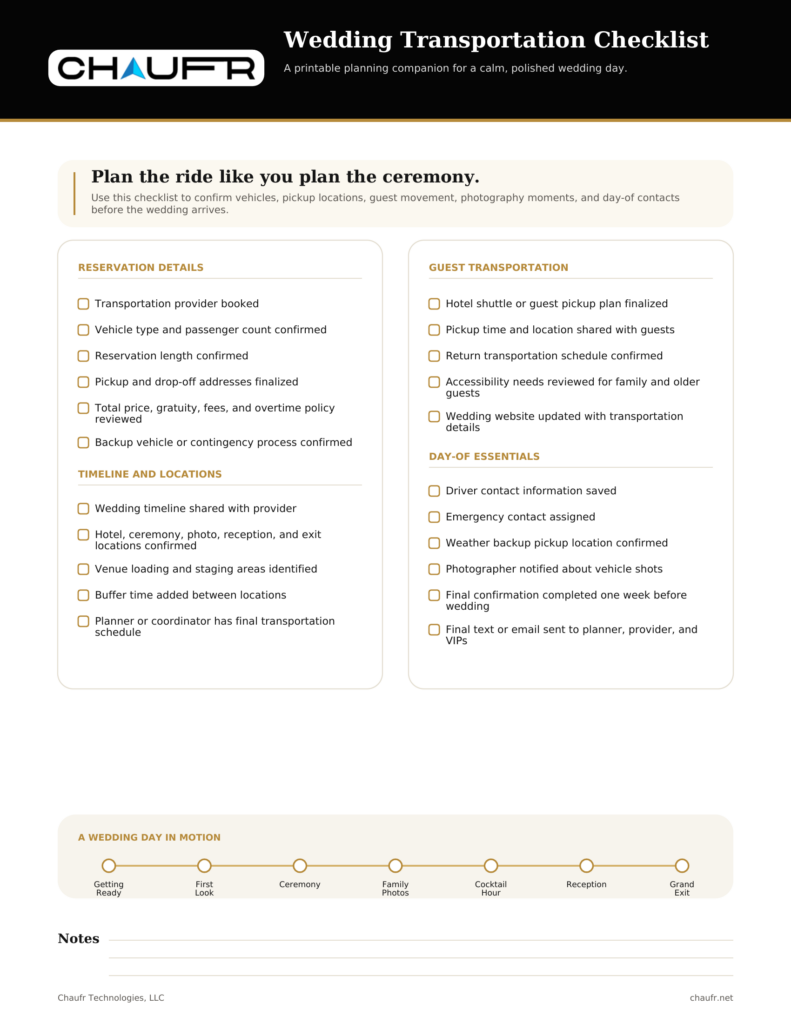
- Transportation provider booked
- Vehicle type confirmed
- Reservation length confirmed
- Pickup and drop-off addresses finalized
- Wedding timeline shared
- Driver contact information saved
- Emergency contact assigned
- Guest shuttle schedule finalized
- Hotel pickup location confirmed
- Venue loading area confirmed
- Weather backup location identified
- Photographer notified about vehicle photo opportunities
- Gratuity and fees confirmed
- Overtime policy reviewed
- Final confirmation completed one week before the wedding
This does not need to be complicated.
It just needs to be done before the wedding day.
How Chaufr makes wedding transportation easier
Booking wedding transportation has traditionally required phone calls, emails, quotes, follow-ups, and uncertainty.
Couples often have to contact multiple companies just to understand pricing and availability. Vehicle options may be unclear. Fees may not be obvious. Hourly availability can vary. And when several providers are involved, comparing them can become frustrating.
Chaufr was created to make professional chauffeur service easier to access.
Through Chaufr, couples can connect with licensed professional chauffeur operators for weddings, airport arrivals, family transportation, bridal party movement, and elegant grand exits. The goal is simple: make premium transportation easier to understand, easier to book, and easier to trust.
For weddings, that matters.
You are not just booking a ride.
You are protecting the timeline of one of the most important days of your life.
Final thoughts
The flowers will eventually fade. The music will end. The last glass will be cleared. The venue doors will close.
What remains are the moments.
The quiet ride before the ceremony. The laughter with your bridal party. The first drive together after saying “I do.” The final look back as you leave the reception and begin the next chapter of your life.
Wedding transportation is not simply about movement.
It is about giving those moments room to happen.
Plan it early. Choose professionals you trust. Build in time. Think about your guests. Treat the journey with the same care you give the ceremony and reception.
Because when the day finally arrives, you should not be thinking about cars, timing, parking, or directions.
You should be present.
You should be celebrating.
You should be enjoying the ride.
Ready to plan your wedding transportation?
Chaufr connects couples with licensed professional chauffeur operators for elegant, reliable wedding transportation.
Whether you need an executive sedan for your grand exit, a luxury SUV for family transportation, or hourly chauffeur service for a full wedding day, Chaufr helps make the experience simple from the first pickup to the final ride home.
Explore wedding transportation with Chaufr and make every arrival feel intentional.
Stay informed.
Get the latest guides, industry insights, and Chaufr updates delivered to your inbox.